
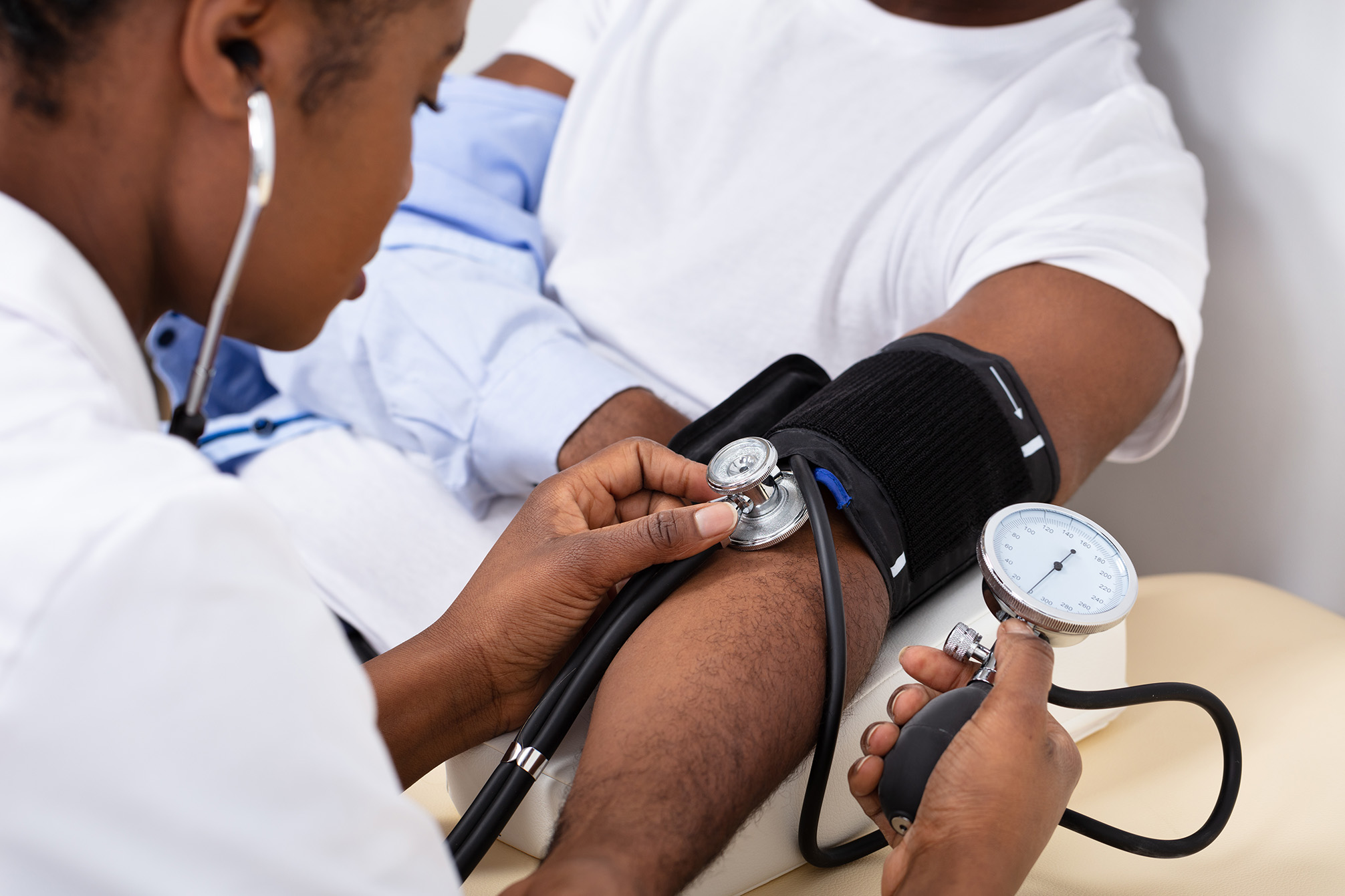
High blood pressure—or hypertension—isn’t just a health stat.
In our communities, it’s a loud, persistent warning bell. You should have it checked annually.
According to the CDC, African Americans develop high blood pressure earlier in life and are more likely to suffer serious complications like stroke, heart disease, and kidney failure compared to any other racial or ethnic group. That’s not just a coincidence. It’s the result of generations of systemic inequities, stress, limited access to culturally affirming healthcare, and food deserts that leave our neighborhoods with more fast food than fresh food.
At the Sinkler Miller Medical Association, we’re not just focused on the numbers—we’re focused on you. Part of caring for our communities means making sure we break down what those numbers actually mean, when to seek support, and how to reclaim our health through knowledge, nutrition, and connection.
So, What Is High Blood Pressure?
Blood pressure is the force of your blood pushing against the walls of your arteries. You’ve probably heard two numbers: for example, “120 over 80.” That’s your systolic pressure (when your heart beats) over your diastolic pressure (when your heart rests between beats).
Here’s a quick breakdown:
- Normal: Less than 120/80
- Elevated: 120–129 systolic / less than 80 diastolic
- High Blood Pressure (Stage 1): 130–139 systolic / 80–89 diastolic
- High Blood Pressure (Stage 2): 140+ systolic / 90+ diastolic
- Hypertensive Crisis: 180+/120+ — Seek emergency care immediately
High blood pressure is often called the “silent killer” because you might not feel anything wrong until it’s already done damage. That’s why regular check-ups, even when you feel fine, are so important—especially for Black adults, who are statistically more likely to go undiagnosed or undertreated.
When Should You See a Doctor?
You should see a doctor:
- If your blood pressure is consistently above 130/80
- If you experience symptoms like frequent headaches, blurred vision, chest pain, or shortness of breath
- If you have a family history of hypertension, stroke, or heart disease
- If you’ve recently had major stress, trauma, or changes in your lifestyle or sleep
- If you’re pregnant or postpartum (especially for Black women, who face significantly higher risks for preeclampsia and other complications)
Our recommendation? Build a relationship with a doctor who understands you—your culture, your stressors, your story. Organizations like the Association of Black Cardiologists and BlackDoctor.org offer directories and resources to help you find culturally competent care.
Diet: The Everyday Medicine
You don’t have to overhaul your entire kitchen to see change. Start small and build from there.
Here are a few blood pressure-friendly habits that honor cultural traditions and your health:
- Season with purpose: Try herbs, spices, garlic, lemon, and vinegar instead of salt-heavy sauces or pre-packaged seasonings.
- Eat the rainbow: Leafy greens (collards, spinach), berries, beets, and citrus fruits are powerful allies.
- Mind the meat: Try fish (like salmon or sardines), tofu, or legumes as heart-healthy protein options.
- Cut the soda: Sugary drinks are linked to high blood pressure and diabetes. Try sparkling water with fruit or unsweetened herbal teas.
- Stay hydrated: Drinking enough water helps reduce the strain on your heart and kidneys.
Want more guidance? The American Heart Association’s recipes are a great starting point.
The Bigger Picture: This Is About More Than Pressure
High blood pressure in Black communities is not just about genetics. It’s about environments, histories, and systems that need changing.
That’s why our organization exists.
Yes, we offer mentorship, scholarships, and a vibrant community for Black medical students and physicians. But our larger mission is to transform the health of our communities by transforming who gets to care for them.
When you see one of our doctors, you’re not just seeing someone with a medical degree—you’re seeing a possibility, a mirror, a trusted voice. We’re committed to building that pathway. Because your wellness is not just personal—it’s political. It’s ancestral. It’s powerful.
What Can You Do Right Now?
Wondering what you can do now that you have this information?
- Get your blood pressure checked this month. Bring a loved one with you.
- Talk to your family. Share your numbers. Ask about theirs.
- Learn more. Explore resources at CDC’s High Blood Pressure page or Million Hearts.
- Support Black medical students and physicians. Attend a Sinkler Miller event, donate to our scholarship fund, or mentor the next generation.
When we care for our bodies—and our doctors—we’re doing more than managing blood pressure. We’re raising the standard for what health equity looks like.
Let’s take back our power, one heartbeat at a time.