
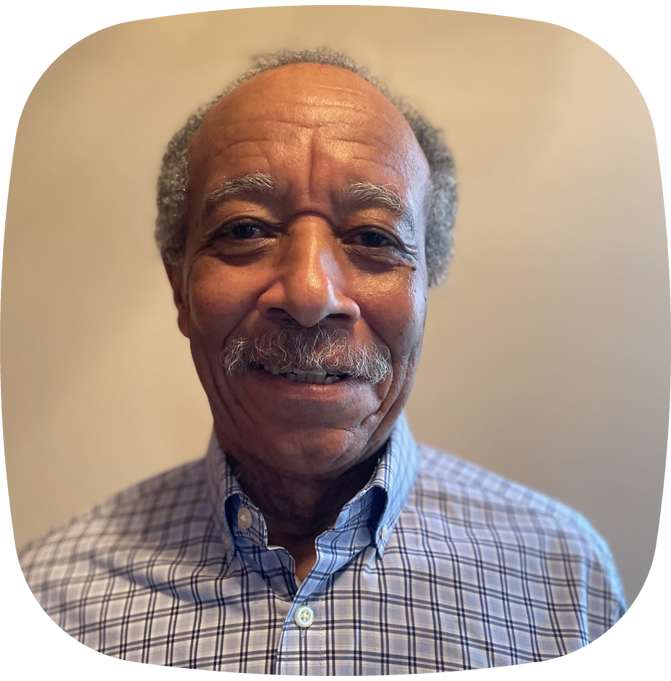
What happens when you dedicate your entire medical career to the people who need you most—despite the odds?
For Dr. Leon Richmond, the answer lies in decades of service as a beloved OB-GYN in Oakland.
A Howard University alum shaped by the Black Power Movement and the mission of community care, Dr. Richmond brought his passion for justice into every exam room. In this interview, Dr. Richmond reflects on what it meant to build a career from the ground up as a Black doctor in private practice, how the profession has evolved, and why he still advocates fiercely for Black maternal health today.
Sinkler Miller Medical Association: Dr. Richmond, let’s start at the beginning. What made you choose OB-GYN?
Dr. Leon Richmond: I came out of Howard in the ’60s, and the idea of serving the community was everything. Being an OB-GYN gave me the opportunity to work with women at all stages—pregnant and not—and the people I treated were mostly from low-income communities. And that was by design as it was the demographic I wanted to serve.
SMMA: You’ve seen a lot of change over the years. What did the practice landscape look like when you started?
Dr. Richmond: Back in the late ’70s, everyone was in private practice. You ran your office, managed your staff, dealt with billing—and made it work. But over time, the system became more corporate. HMOs and PPOs became the standard, and malpractice premiums skyrocketed. It went from $10,000 a year to $25,000 practically overnight. Now it’s close to $100,000. It was tough, especially since many of us were serving Medicaid patients who paid far less. We were doing twice the work for half the pay.
SMMA: That sounds incredibly difficult. What kinds of barriers did you face as a Black doctor?
Dr. Richmond: Financial ones, first. We had to work harder to make the same money because our patient base was mostly Medicaid. Early on, white doctors wouldn’t even see those patients—until it became financially viable, and then suddenly we were competing for them. There were also implicit biases. If you wanted access to certain patients or hospital privileges, you needed someone to vouch for you. That’s where being a Sinkler Miller member helped.
SMMA: Tell us more about that—how did SMMA support you?
Dr. Richmond: Advocacy, first and foremost. If racism reared its head, you had respected Black doctors from SMMA who could go to advocate for you. Then there was the camaraderie. We had monthly dinners and meetings so we weren’t isolated. We referred patients to each other and built a network. That mattered.
SMMA: And today?
Dr. Richmond: It’s different. A lot of Black doctors work in large systems where they might be one of a few. SMMA still plays a critical role—whether it’s morale, protection, or mentorship. We need those touchpoints, especially now.
SMMA: What issue are you most passionate about?
Dr. Richmond: Black maternal and infant mortality. It’s still a crisis. And it’s preventable. It takes work, compassion, and systems that are responsive to our people. I spent my whole career trying to prevent those outcomes—and it’s still something I care deeply about.
SMMA: Any advice for Black medical students coming up?
Dr. Richmond: Find your people. Find your purpose. And know that organizations like SMMA aren’t just history. They’re your future safety net, your community, and your launchpad.
Interested in joining a community of support, mentorship, and advocacy? Become a member of the Sinkler Miller Medical Association today and help us continue the legacy of doctors like Dr. Richmond—committed to care, excellence, and justice.